Every week throughout Northern New South Wales, waste oil collection vehicles travel thousands of kilometres collecting used lubricants, hydraulic oils, engine oils, transmission fluids and industrial waste oils from workshops, transport depots, mining contractors, manufacturing facilities and agricultural operations.
While collection vehicles often attract attention due to their tanks, pumps and vacuum systems, one of the most critical components is often overlooked.
The hose.
Without the correct hose, waste oil collection becomes slower, less efficient, more dangerous and significantly more expensive.
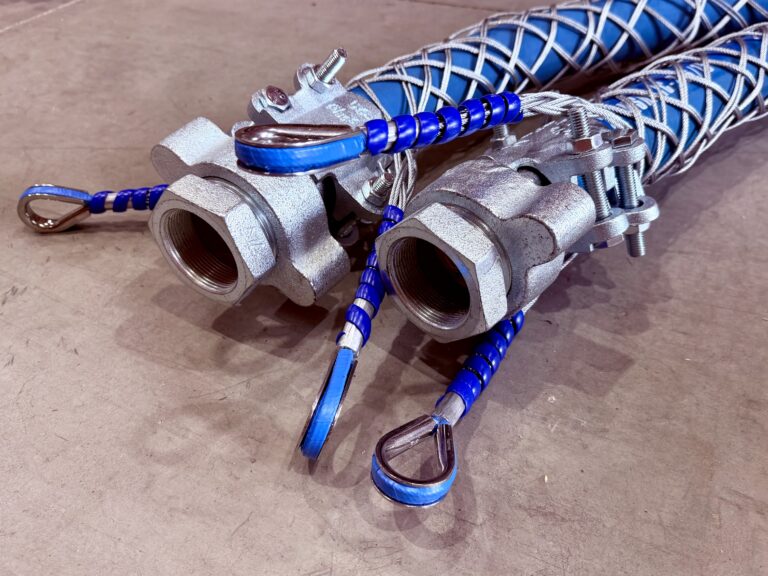
Recently Fox Global supplied both Code 901 and Code 969 Composite Hoses to a waste oil collection specialist operating throughout Northern NSW. Their requirement was straightforward:
- Maximum reliability
- Excellent chemical compatibility
- Easy handling
- Long service life
- Reduced downtime
- Improved operator safety
The solution involved selecting the correct composite hose technology for multiple transfer applications.
Why Waste Oil Is More Challenging Than Fresh Product Transfer
Many people assume waste oil behaves similarly to fresh lubricating oil.
In reality, waste oil can be far more aggressive.
Collected waste oil often contains:
- Fuel contamination
- Water contamination
- Solvents
- Degreasers
- Hydraulic fluids
- Grease residues
- Metal particles
- Cleaning chemicals
- Unknown hydrocarbons
Every collection point can present a different product composition.
This variability is one of the primary reasons composite hoses continue gaining popularity throughout Australia’s waste management sector.
Understanding Composite Hose Technology
Unlike conventional rubber hose construction, composite hose utilises multiple layers of engineered materials wrapped around internal and external wire helices.
This creates a hose assembly that combines:
- Flexibility
- Chemical resistance
- Lightweight handling
- Crush resistance
- Vacuum capability
- Pressure capability
The construction typically consists of:
Inner Film Layers
Providing chemical compatibility with transferred products.
Reinforcement Layers
Delivering strength and structural integrity.
Internal Wire Helix
Maintaining hose shape and vacuum performance.
External Wire Helix
Protecting the hose and improving mechanical strength.
Outer Cover Layers
Providing abrasion and environmental protection.
This multi-layered construction creates an exceptionally versatile transfer hose.
Why Waste Oil Operators Prefer Composite Hoses
Waste oil collection contractors face unique operational challenges.
Unlike fixed process plants, collection operators regularly encounter:
- Different customers
- Different products
- Different operating conditions
- Different hose handling methods
Composite hoses provide a practical solution because they offer broad chemical compatibility while remaining lightweight enough for daily use.
Benefits include:
Easier Handling
Composite hoses are generally lighter than equivalent rubber alternatives.
Reduced Operator Fatigue
Particularly important during repeated collection operations.
Excellent Chemical Resistance
Suitable for a broad range of hydrocarbons and petroleum products.
Flexible Construction
Allows easier manoeuvring around tanks, pits and collection points.
Improved Vacuum Performance
Ideal for suction and recovery applications.
Code 901 Composite Hose Explained
Code 901 has become one of the industry’s most widely used composite hose configurations for petroleum and hydrocarbon service.
It is commonly selected for:
- Waste oil transfer
- Lubricating oil transfer
- Diesel transfer
- Fuel oil transfer
- Petroleum products
- Tank truck operations
Key features include:
Broad Hydrocarbon Compatibility
Suitable for numerous petroleum-based products.
Lightweight Construction
Reduces operator handling requirements.
Excellent Flexibility
Particularly useful when accessing difficult collection points.
Vacuum and Pressure Capability
Suitable for loading and unloading operations.
Proven Industry Reliability
Used extensively throughout Australia’s transport and waste industries.
Code 969 Composite Hose Explained
Where Code 901 provides excellent all-round hydrocarbon performance, Code 969 introduces additional capabilities for more demanding applications.
Common uses include:
- Aggressive hydrocarbon transfer
- Chemical contamination risks
- Mixed waste streams
- Industrial waste handling
- Refinery applications
- High-specification tanker operations
Key advantages include:
Enhanced Chemical Resistance
Suitable where product variation may occur.
Increased Operational Versatility
Ideal for operators collecting multiple waste streams.
Long Service Life
Particularly beneficial in demanding environments.
Broad Product Compatibility
Provides confidence when handling variable collected products.
Comparing Code 901 and Code 969
| Feature | Code 901 | Code 969 |
|---|---|---|
| Waste Oil Transfer | Excellent | Excellent |
| Petroleum Products | Excellent | Excellent |
| Chemical Resistance | Very Good | Superior |
| Flexibility | Excellent | Excellent |
| Tanker Applications | Excellent | Excellent |
| Mixed Waste Streams | Good | Excellent |
| Industrial Waste Oils | Very Good | Excellent |
| Operating Versatility | High | Very High |
For many waste oil collection businesses, both hose types provide valuable solutions depending on collection requirements.
Real World Example: Northern NSW Waste Oil Collection
The Northern NSW region presents a unique operating environment.
Collection contractors may service:
- Heavy vehicle workshops
- Agricultural operations
- Earthmoving contractors
- Quarries
- Manufacturing facilities
- Local councils
- Marine operators
- Industrial processing facilities
A single collection run may involve dozens of different sites.
Each site can present different contaminants and operating conditions.
The selected Code 901 and Code 969 hoses supplied by Fox Global were chosen specifically to provide flexibility and reliability across a broad customer base.
Common Mistakes When Selecting Waste Oil Hoses
Selecting Purely on Price
The cheapest hose frequently becomes the most expensive.
Premature failures create:
- Downtime
- Cleanup costs
- Labour expenses
- Lost productivity
Ignoring Product Variability
Waste oil is rarely a single product.
Collection operators must consider unknown contamination.
Choosing Excessive Weight
Heavy hoses increase operator fatigue and injury risk.
Neglecting Vacuum Requirements
Some hoses perform well under pressure but poorly under vacuum.
Overlooking Chemical Compatibility
A hose must suit the entire range of collected products.
Safety Considerations for Waste Oil Transfer
Safety remains one of the most important factors in hose selection.
Potential hazards include:
- Product spills
- Environmental contamination
- Operator exposure
- Static electricity
- Hose failure
- Coupling separation
Composite hose systems assist in reducing these risks through appropriate hose construction and compatibility.
Maintenance Practices That Extend Hose Life
Operators can significantly increase service life by following simple maintenance procedures.
Conduct Pre-Use Inspections
Check for:
- Cover damage
- Abrasion
- Kinks
- Coupling wear
Store Correctly
Avoid:
- Sharp bends
- Vehicle traffic
- Direct sunlight where possible
Clean After Use
Particularly important where contaminated products are handled.
Follow Testing Requirements
Regular testing provides confidence in hose integrity.
Replace When Required
No hose lasts forever.
Preventative replacement is considerably cheaper than emergency replacement.
Why Composite Hoses Continue Growing in Popularity
Australia’s waste management industry continues to evolve.
Operators now demand:
- Higher reliability
- Greater versatility
- Reduced downtime
- Improved safety
- Better environmental performance
Composite hoses continue meeting these requirements because they offer a unique combination of:
- Strength
- Flexibility
- Compatibility
- Performance
How Fox Global Supports Waste Management Operators
Fox Global supplies composite hose solutions to customers throughout:
- Northern NSW
- Sydney
- Newcastle
- Melbourne
- Brisbane
- Adelaide
- Perth
- Regional Australia
As a proudly Australian-owned and family-operated business, we understand the importance of keeping equipment operational and minimising downtime.
Our customers value:
Technical Expertise
Helping identify the correct hose for the application.
Fast Response Times
Urgent requirements often require immediate action.
National Supply Capability
Supporting customers across Australia.
Custom Hose Assemblies
Built to suit specific operational requirements.
Quality Components
Designed for demanding industrial environments.
Phone: 1300 852 795
Email: sales@foxglobal.com.au
Industries Using Code 901 and Code 969 Composite Hoses
While waste oil collection remains a major application, these hoses are also widely used throughout:
Mining
Fuel and lubricant transfer.
Civil Construction
Bulk fluid handling.
Chemical Processing
Compatible chemical transfer applications.
Manufacturing
Process fluid transfer.
Oil & Gas
Hydrocarbon movement.
Marine
Fuel and oil transfer systems.
Agriculture
Bulk fuel storage and transfer.
Water Treatment
Specialised process applications.
Waste Management
Collection and transfer operations.
Frequently Asked Questions
What products can Code 901 transfer?
Primarily petroleum-based products including waste oils, lubricants and hydrocarbons.
When should Code 969 be selected?
Where broader chemical compatibility or mixed waste stream exposure may occur.
Are composite hoses suitable for vacuum service?
Yes, many composite hose configurations perform exceptionally well under vacuum conditions.
How often should composite hoses be inspected?
Before use and in accordance with site maintenance requirements.
Can Fox Global supply complete assemblies?
Absolutely. Fox Global supplies complete assemblies ready for service.
Do you supply Australia-wide?
Yes. We support customers nationally.
Can composite hoses be repaired?
Assessment depends on the damage and application. Replacement is often the safest option.
Do you stock common sizes?
Yes. Common configurations are regularly supplied throughout Australia.